Clinical Trial Experience
IDEO & Lilly Clinical Trials: Project Possibility
Redesigning the clinical trial experience for research sites and patients
Business Challenge: ahead of a major new insulin trial program, Lilly needed more research sites working with them, faster patient enrollment, more complete data, and sites and patients who would want to come back for future trials.
Result: a shared vision, six partnership principles and 25 service concepts in five areas, prioritized with Lilly’s clinical teams in a workshop that launched the next phase of work.
This project grew out of earlier work on clinical study documentation. With a Lilly clinical research physician, I redesigned two sets of study documents to help study coordinators manage paper-based forms and work more effectively with patients. Coordinators began requesting the new designs because they saved time and reduced confusion, which showed how much the trial experience could improve.
Since 2007, IDEO and Lilly had been working together to improve clinical trials. In Project Possibility, I led design research to understand how a trial really works for everyone involved: Lilly’s clinical trial teams, the physicians (principal investigators) and study coordinators who run trials at research sites, and the patients who take part in them.
Research in three countries
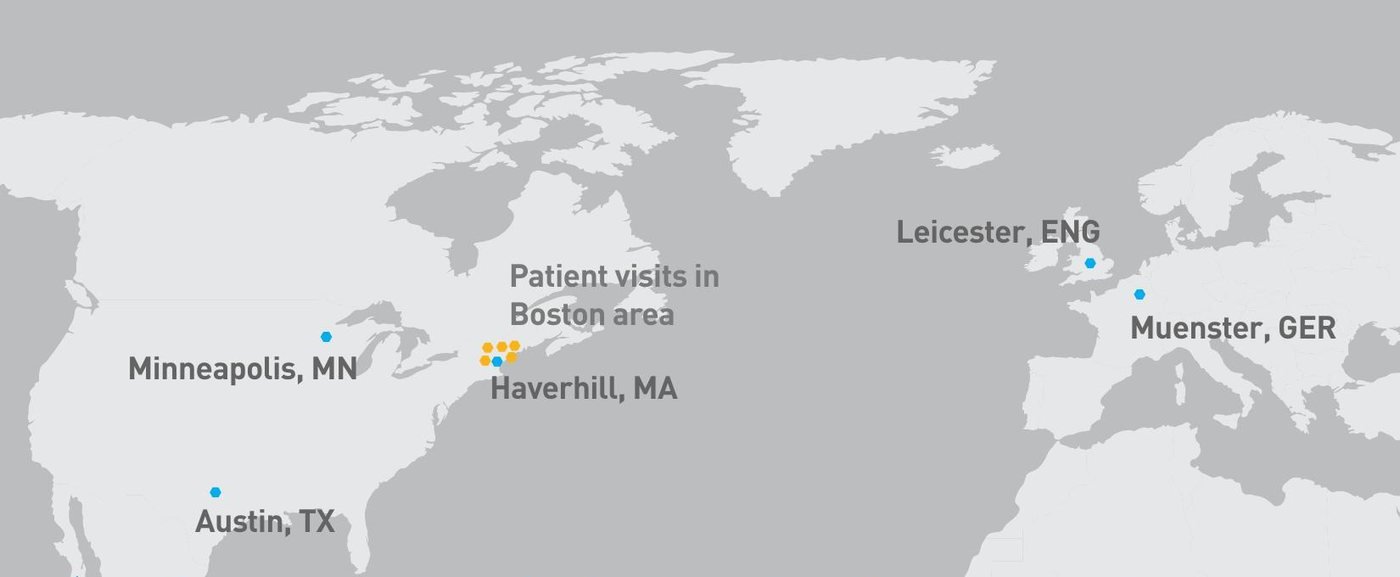
Over 11 weeks, we interviewed Lilly’s trial managers, clinical research physicians and site liaisons; visited five research sites in Minneapolis, Austin, Haverhill (Massachusetts), Leicester (England) and Muenster (Germany); and met trial participants with type 1 and type 2 diabetes in their homes. We sketched early service ideas and refined them with site staff during fieldwork, so the people who would use them helped shape them.
What keeps sites and patients in a trial
Patients joined trials to get support, information and structure to manage their diabetes better. What kept them committed was their relationship with the study coordinator. Sites joined to spend more time supporting patients, to see science evolve, and because, done well, research is a good business. For many patients, a trial was also a safe, supported way to start insulin, a step many people fear.
Trials depend on two partnerships
The research site sits at the center of every trial. It is Lilly’s partner for science and business, and the patient’s partner for care. When either partnership weakens, enrollment, retention and data quality suffer.
Everyone valued Lilly’s legacy and its people, and sites wanted to succeed with Lilly. But instructions flowed one way and data was requested back, with little returned. Tight resources were making the disconnects worse just as competition for sites and patients was growing.
- “Who’s our monitor? We’ve had 9 in 6 months.”Research site
- “We’re supposed to screen 10 patients but only got 3 kits in time. Then a message: ‘enrollment over.’”Research site
- “I didn’t appreciate just being handed a pile of paper and a phone number.”Trial participant
Six partnership principles
We translated the research into principles for every interaction between Lilly, sites and patients:
- See the potential in peopleWhat looks like a careless site is often a capable team let down by poor tools and systems.
- Collaborate early and oftenPeople accept decisions on protocols and milestones when they understand the reasons and can respond.
- Standardize, streamline and prompt what’s essentialSites juggle many trials and patients juggle life; respect their time.
- Enable relevant choicesTailor tools, languages and outreach to each site’s patients and community.
- Help people improve from experienceGive data back, so sites and patients can see how they are doing.
- Build confidence and offer recognitionSay “thank you,” not just instruction and correction.
Five service areas, 25 concepts
| Service area | Trial challenge | Example concepts |
|---|---|---|
| Collaborating with clarity and consistency | Protocol feasibility, monitor turnover, slow answers | Site and patient reviews of protocols, budgets and tools before startup; standards for consistent, qualified monitors |
| Preparing sites to succeed | Site startup, training across trials | A “Site Set-for-Success” kit with a visit-by-visit researcher’s guide; a visual trial preview; a redesigned kickoff conference |
| Connecting patients, primary care physicians and sites | Recruitment and enrollment | Flexible local advertising with fast approvals; outreach kits; a program to bring primary care physicians into research |
| Supporting new therapy and trial experiences | Informed consent, patient burden, retention | A clearer informed consent document with a visual study timeline; a patient starter kit; a titration guidance tool |
| Making data simple and meaningful | Data quality and site workload | A patient e-diary; a tablet for managing trial visits and source data; site performance comparisons |
Making the concepts tangible
For the final workshop, we turned the leading concepts into posters showing how each would work, which principles it followed, why it mattered to each partnership, and open questions such as ethics board approvals, translation and technical integration. Lilly’s clinical teams worked in break-out groups to prioritize quick wins and longer-term investments, and planned the site and patient visits for the next phase.


This study was done in 2010. Many of the ideas presented were later embraced by the industry, such as electronic patient diaries, visual informed consent, site performance dashboards and patient-facing trial portals.
Postscript: the trials this work supported were for basal insulin peglispro (BIL), an investigational long-acting insulin. In Phase 3 trials it lowered HbA1c and reduced nighttime hypoglycemia compared with insulin glargine, but it was linked to increased liver fat and elevated liver enzymes. Lilly discontinued its development in December 2015. The partnership principles and service concepts were designed for Lilly trials across therapies, not only BIL.

