Customer Experience
Oracle Corporation
Outreach to enterprise customers
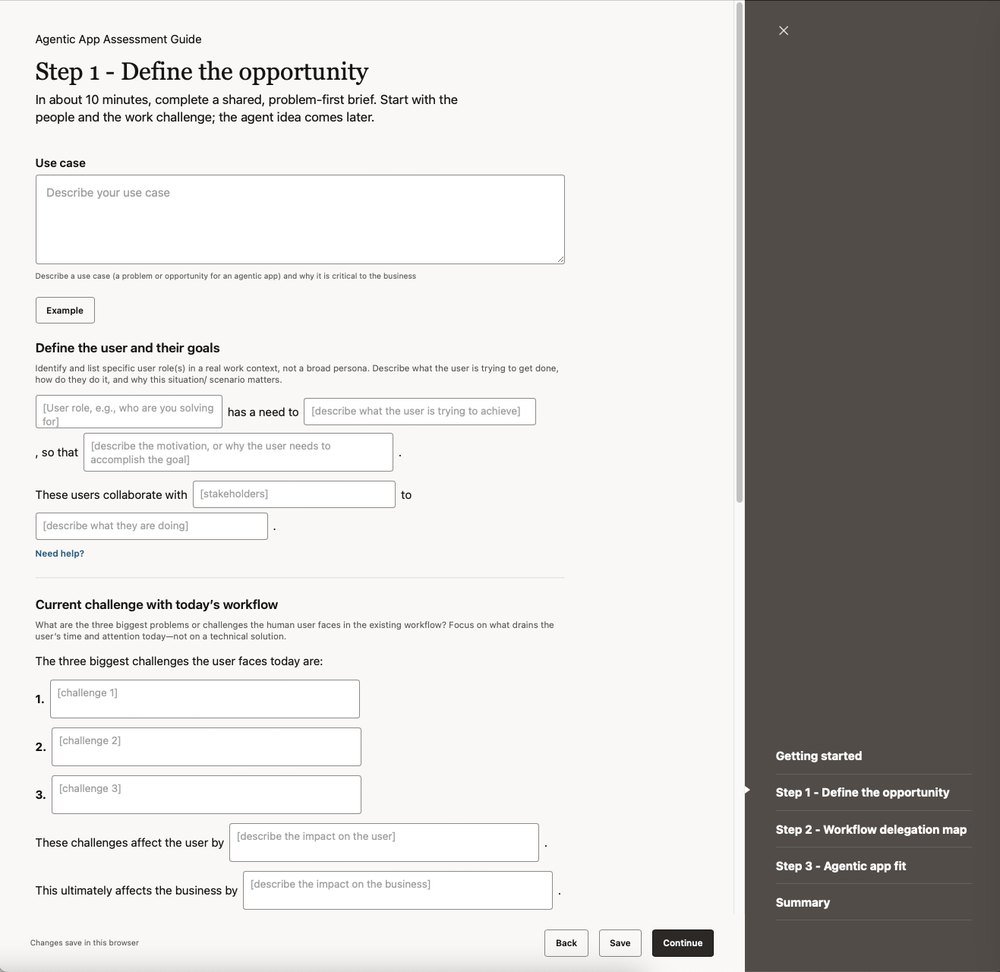
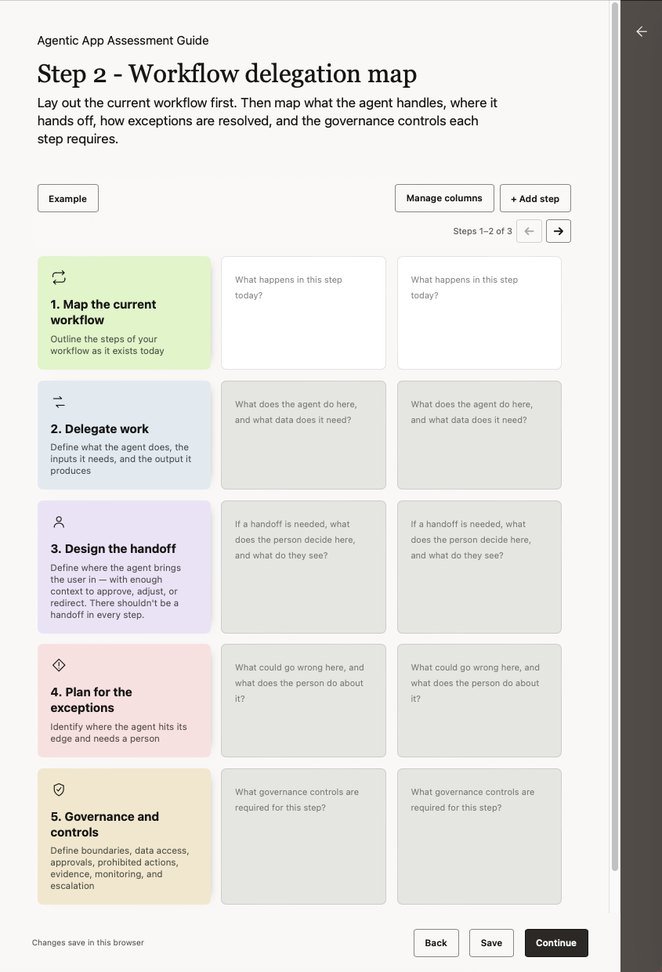
Business Challenge: internal teams were building AI agent powered dashboards and aggregators, but struggled to grasp how to design for autonomous agentic workflows.
Result: we built a workshop around the rubric and piloted it with 12 internal teams to shape their agentic app plans. The rubric and workshop were presented to customers at the Oracle AI World conference in October 2026.
Our research team’s objective was to guide cross functional product teams through a structured inquiry to determine if an existing business challenge is a good candidate for a transformative agentic app. By transformative, we mean that it significantly automates a workflow to move business forward. We developed a rubric of success criteria by analyzing how the best agentic apps in a sizeable internal hackathon were planned. Tools used: Oracle’s ChatGPT and Figma.
Business Challenge: Oracle needed to understand customer perception and reality in their deployment and adoption of new AI-assisted features across the HCM product suite, so that design teams could validate solutions faster.
Result: customers felt heard and they appreciated invitations to evaluate design concepts while research findings directly informed AI assistance UX in the Performance Management products.
I created Signals from the field, a customer listening program for design research, and our team conducted customer feedback interviews on a monthly basis for nearly 2 years. Our reports to product teams highlighted opportunities for improvements as well as reflections on what was working well. Included here are two videos produced for internal audiences as evidence of customer experiences with Oracle’s AI-assist product features. Tools used: Oracle product usage telemetry, AI interview summaries for synthesis.
Healthcare organizations were among the customers we served. I contributed research to products for healthcare customers, including human resources management for nurses and supply chain tracking for medical supplies in hospitals. Several healthcare organizations also took part in the design research program.
Signals from the field: customers on Oracle’s AI agents in HCM
 The question: what does AI mean to customers?
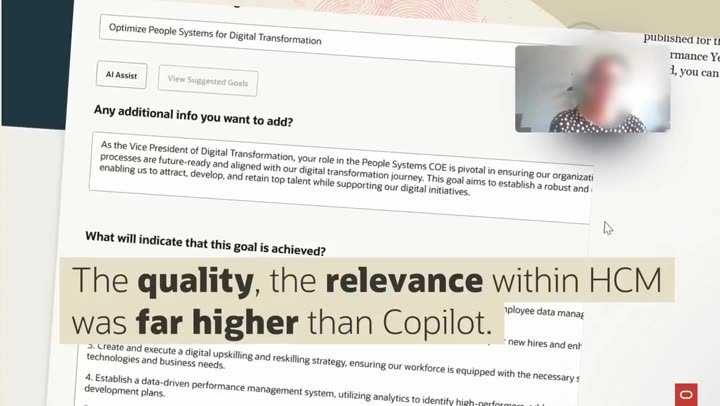 AI Assist drafts a performance goal for a VP of people systems.
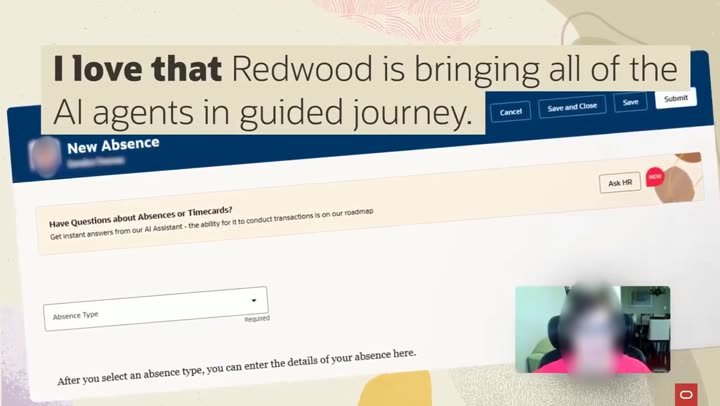 AI agents guide an employee through an absence request.
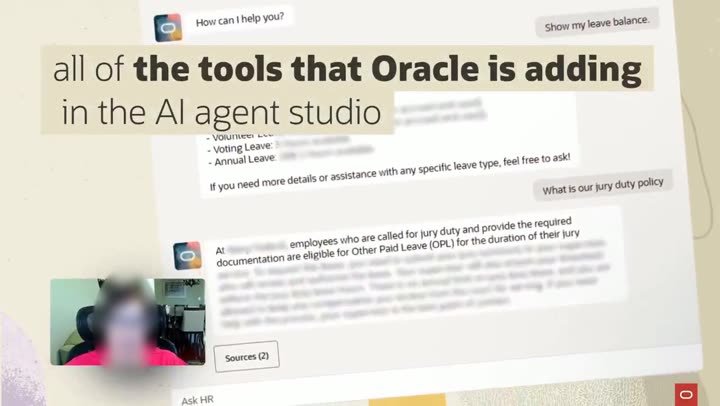 An HR agent answers leave-policy questions in context.
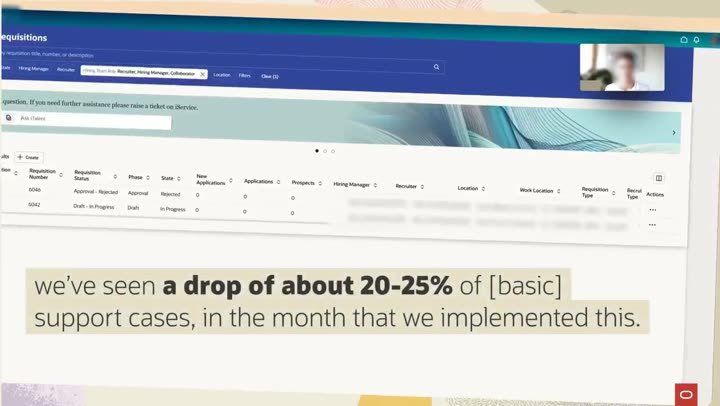 In recruiting, basic support cases dropped 20–25% in the first month.
 The takeaway.
Signals from the field: AI and the future of work
 The premise.
 The question: where is AI today?
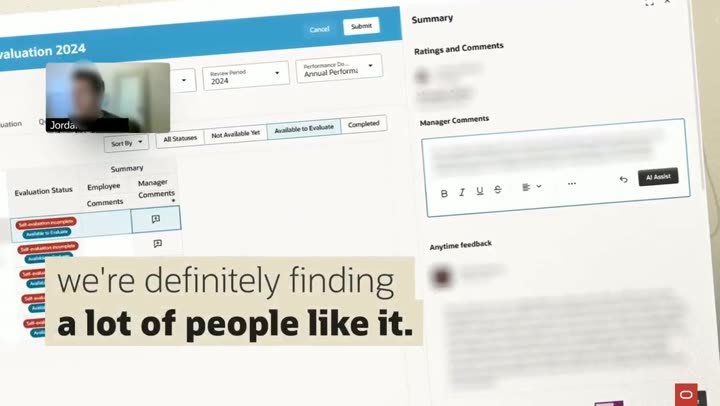 A manager uses AI Assist to write a performance review.
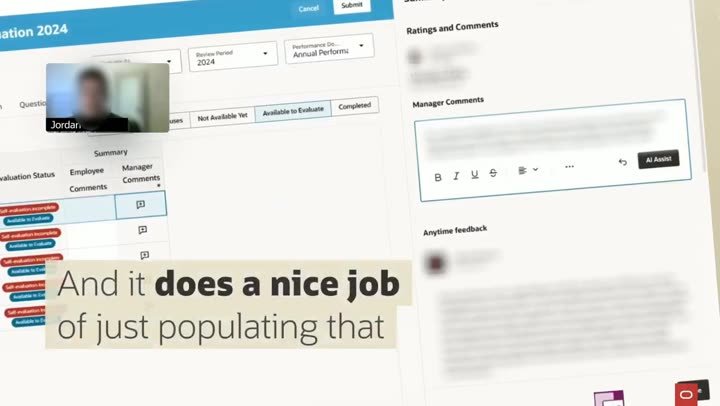 AI drafts comments from existing feedback for the manager to refine.
 The design intent.
 The takeaway.
Business Challenge: identify the human-centered opportunities to create an innovative Workforce Compensation manager experience, so that data drives equitable decisions with ease and clarity, to fairly and appropriately reward employees.
Result: the Workforce Compensation application that had not changed in 9 years was substantially redesigned for Oracle’s Cloud HCM suite and launched in 2026.
Oracle’s Workforce Compensation application is an essential part of the human capital management suite of products. It had not had a UI update for 9 years. Our discovery research uncovered a very long list of improvements and feature requests that fueled a new design. I worked with the PM, designers and developers in agile fashion to build much more functionality and intuitive design into a complex, business-critical app, and prepared the path to add AI assistance to it in 2027.
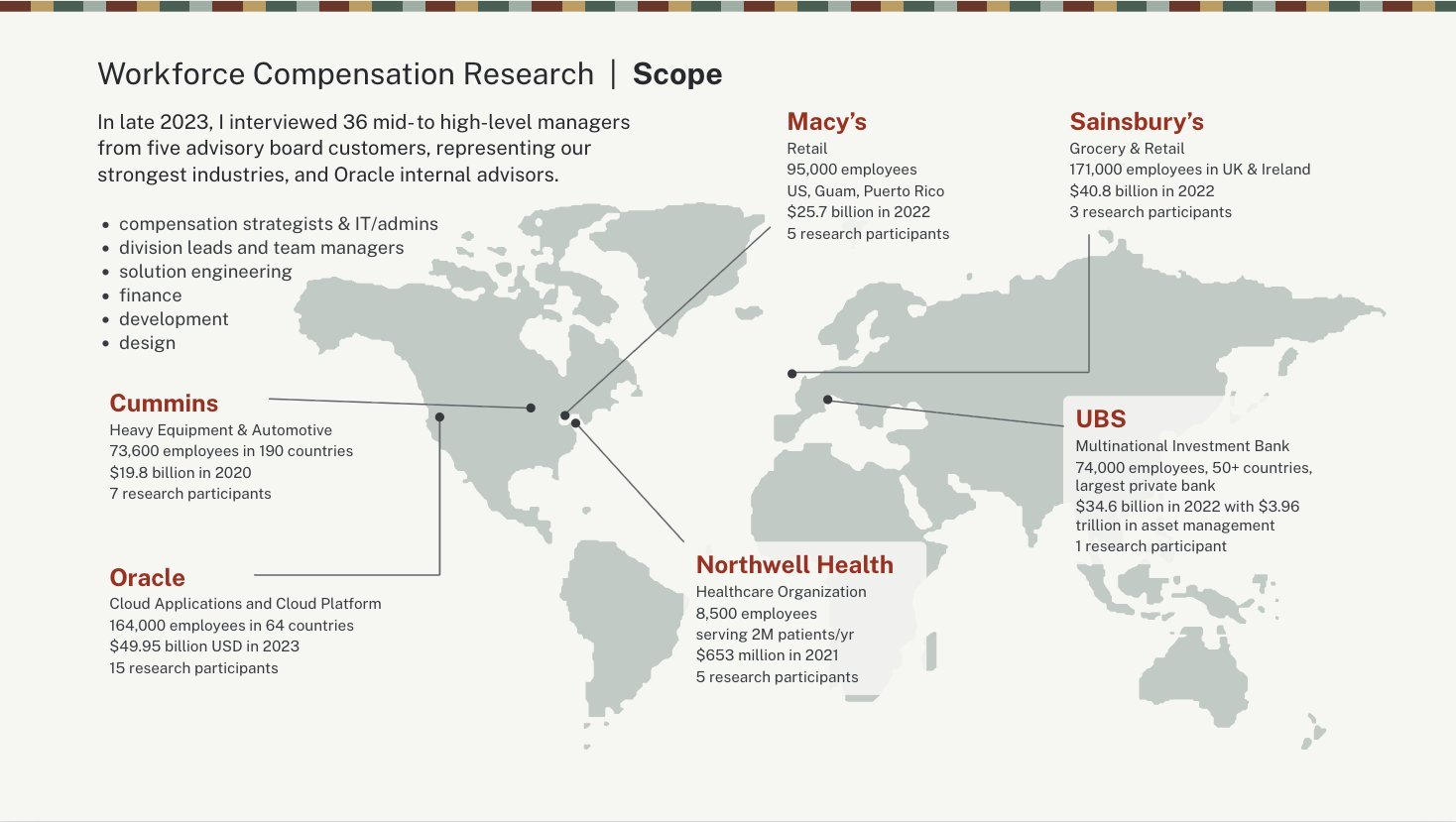
- Identified 105 pain points from interviews
- Prioritized 32 innovation opportunities that would bring high value to manager experiences
- Defined 7 key moments to shift managerial thinking and support decisions with richly visual data
Here are comparisons of the application before and after the research-informed redesign. The new design built in much more functionality and visual information to help managers understand their team member compensation picture.
Before · Budget Sheet

Redesign · Budget

We created the new design with a “first attention” approach, to reduce the risk of losing high performing individuals who were overdue for compensation changes. The new design incorporated AI recommendations on how to distribute salary, equity and bonus budgets to fairly distribute the new budget, making a task that was done only once or twice per year easy to remember and quick to complete.
Before · Award Worksheet

Redesign · Award

The new design enabled managers to fine tune the award for each team member based on their history, compa‑ratio, and pay band comparisons. The inclusion of the Ask Oracle field at the top provided common-language search functionality. Managers could always use the worksheet view of this information, but our concept testing proved that most managers were delighted with the clarity provided by the visual experience.
Here are two more pages from the redesigned app. Customers were eager to put the app into action for their next comp cycles. The intuitive visuals and common language search meant less need to train managers to use the tool, and more ease to quickly complete complex decisions with confidence.
Redesign · Worksheet

The new design for the worksheet view incorporated more information in one place with fewer columns. We understood from customers that eligibility requirements were complicated and employee status constantly changing, especially in retail businesses with hourly and seasonal workers. Customers appreciated the ability to fine tune percentages per location, to align with the current company strategy on where to weight the distributions.
Redesign · My Team

Managers had asked for an easier way to understand at‑a‑glance how their team members compared and which individuals were due for a salary increase. This visual presentation provided historical and projected information to help managers plan and coach individuals.