Future User Experience
IDEO & Samsung
Create UX strategy for tablets in hospitals
Design Challenge: envision a mobile communications strategy for the U.S. healthcare system.
Result: educated the client about the specific needs and opportunities for better communications systems and developed a long-term strategy to promote new product adoption.
Samsung asked IDEO to create a business strategy to market screen products to U.S. hospitals. Samsung had no presence in medical products, and assumed that a retail-style approach would work. The project required deep education for the client about U.S. healthcare adoption of technology, and how medical staff use information to make team decisions and authorize procedures.
I led the client through fieldwork to ground their understanding of the complexity of healthcare providers, medical education, IT and financial systems, and the requirements of secure communications technologies within regional, teaching, and Veterans’ Administration hospitals. The research team included UI design, business factors, and video production.
The research
- ResearchKickoff, recruiting and fieldwork, April–May 2012
- SynthesisStrategy, opportunity areas and design, May–June
- Seoul reviewStrategy and concepts presented to Samsung, June 7
- ProductionConcept film shot and edited, June–July
We spoke with physicians, residents, nurses and administrators across every kind of hospital the U.S. system runs on, so Samsung could see how differently each one buys, secures and uses technology.
Where
- Academic medical centersUC San Francisco, UC Irvine, Stanford Hospital, Packard Children’s
- Closed systemsVeterans’ Administration hospital, Kaiser Permanente
- Private hospitals & ambulatory careCedars-Sinai, California Pacific Medical Center, Palo Alto Medical Foundation
- County hospitalsSanta Clara County, San Francisco General, Oakland County
What we found
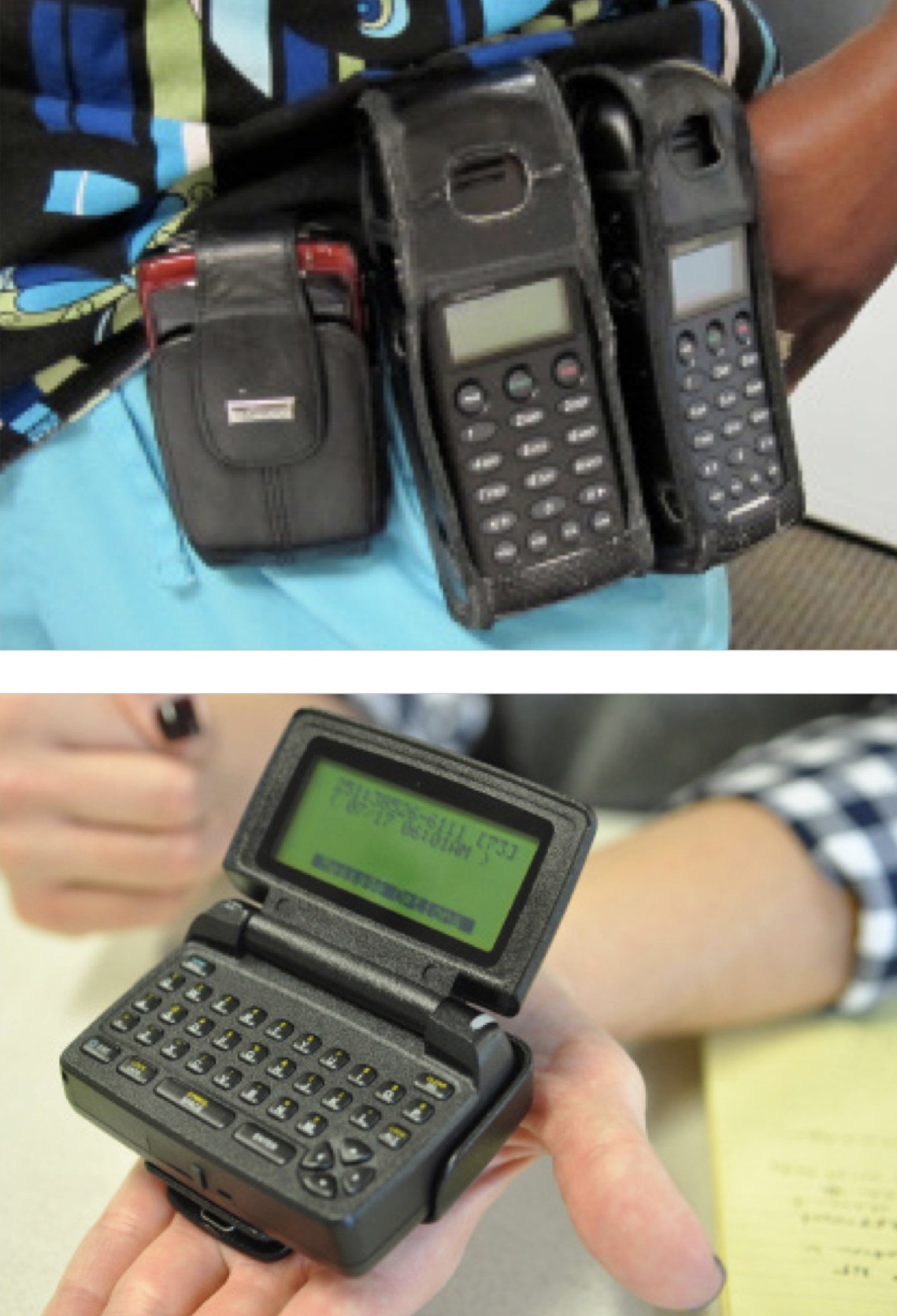
Everywhere we went, clinicians had built workarounds out of paper, pagers and personal phones. We grouped what we saw into three areas where a mobile device could help.
| Area | What we saw | What people need |
|---|---|---|
| Clinical knowledge | Doctors and students pieced together desktop files, phone notes and handwritten pocket guides, and carried hospital data home on USB drives. | Portable, secure access to information they can annotate and share with their team. |
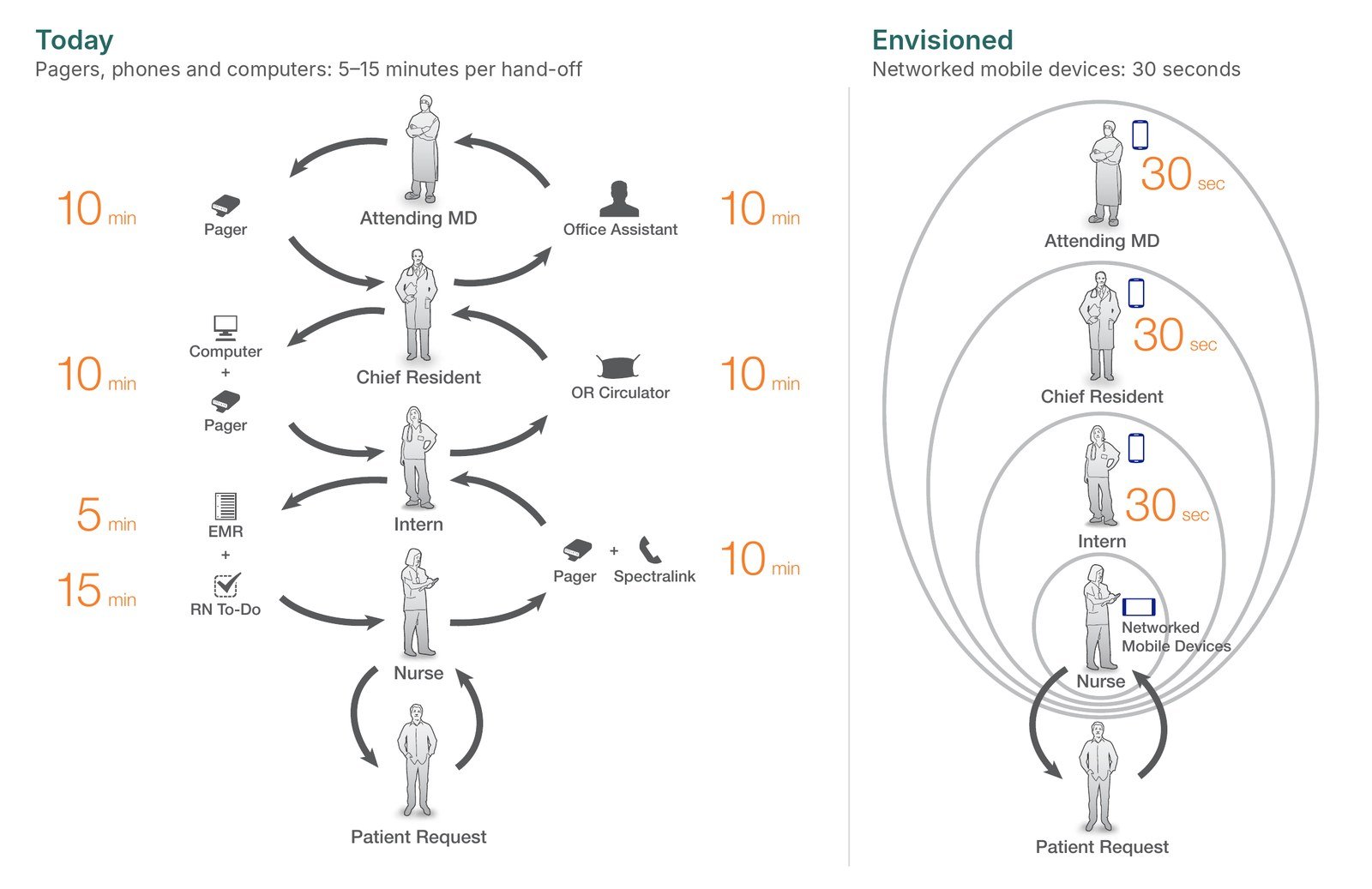
| Communication & workflow | Staff answered anonymous pages by hunting for a phone. Messages had no priority, and decisions were not attached to the patient’s record. | Prioritized, secure messages with caller ID, tied to the patient. |
| Patients at home | People with chronic illness kept their own logs of symptoms and medications, often incomplete, with no way to alert a doctor when things got worse. | Automatic tracking and reminders, and two-way contact that allows early intervention. |
A phased strategy for Samsung
Instead of a retail launch, we recommended building the market in two directions: selling personal tools directly to physicians, who adopt quickly and influence their hospitals, and selling enterprise systems to hospital administrators, who need efficiency at scale. The three areas became a sequence, from 2012 to 2015.
| Step | Opportunity | Who buys |
|---|---|---|
| 1Acquire customers | Clinical knowledge exchange: medical education and collaboration tools for professionals. | Individual physicians and medical students, about 1 million people |
| 2Reach into hospitals | Communication and workflow tools that work alongside electronic health records. | Hospital administrators, for about 740,000 hospital physicians and nurses on duty |
| 3Expand into the ecosystem | Remote patient engagement for clinical trials and chronic disease management. | Drug companies and clinical research organizations |
The film
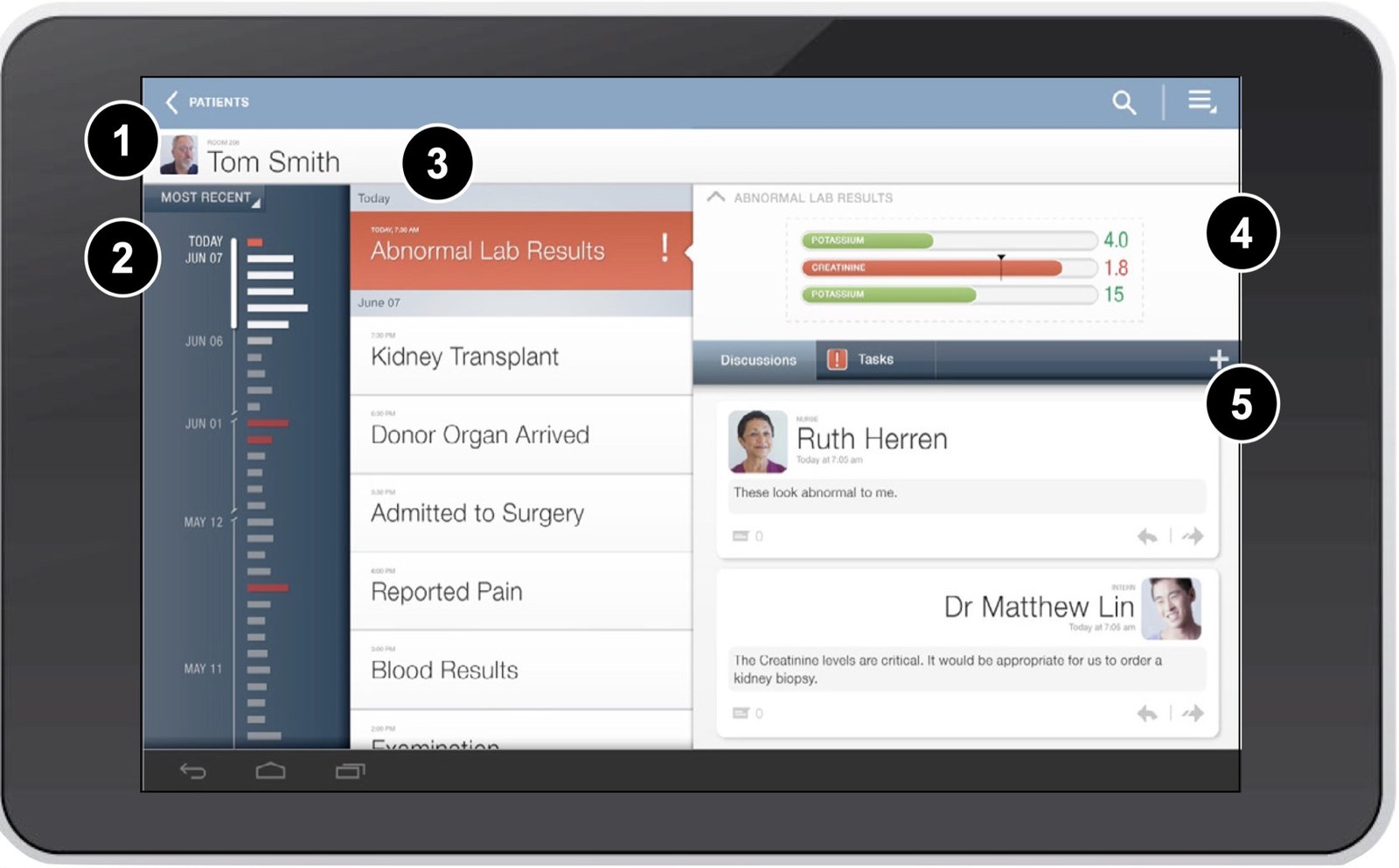
The final deliverable was a high-quality, full-motion film used to build director-level support for the Samsung global medical business. Real clinicians described the problems in their own words, and actors played out each opportunity on concept devices. This excerpt shows the communication and workflow story.
“Healthcare communication technology lags two decades behind consumer technology. The U.S. healthcare system is in the midst of radical change.” — Dr. Amanda Sammann, UCSF trauma surgeon