Clinical Nutrition & Oncology
IDEO & Numico: Owning the Nutritional Journey
A patient-journey strategy for medical nutrition, from home to hospital and back
Business Challenge: Nutricia, the clinical nutrition division of Numico, makes liquid nutrition for patients who drink it or are tube fed, with a focus on cancer, diabetes and children. It wanted a business strategy and brand direction that would improve patients’ experience in hospital and move its supplements into retail stores.
Result: a strategy to stop selling products one by one and organize the business around the patient’s nutritional journey, with communications, services and products for each stage, and cancer nutrition concepts refined with feedback from users.
When someone has a serious illness, good nutrition is critical to recovery. Yet clinical nutrition sat in an awkward space between food and pharma. Nutricia didn’t have the resources to act like a drug company and run large clinical trials, and it would lose medical credibility if it acted like a food company. It had no clear territory of its own.
Research in three countries
To learn how patients experience nutrition and how health professionals understand supplements, we did human factors research in three countries with different health care systems.
Where
Who
- Patients and carers
- At home and in care homes
- Nurses
- District and hospital nurses
- Doctors
- General practitioners, oncologists and other specialists
- Supporting staff
- Dietitians and pharmacists
- Nutricia
- Sales teams
Why the old business model was stuck
Nutricia first sold general malnutrition products, then added disease-specific products, each with its own brand. Both hit barriers that research made visible:
- “When the results came back saying 36% of the patients on our caseload had malnutrition I couldn’t believe it. I really thought all of them were OK.”District nurse
- “Our sales team spend 80% of their time selling the concept of malnutrition and only 20% selling the products designed to treat it.”Nutricia sales team member
- “No one came to me and explained the transition between the hospital and home… I felt frightened and alone.”Gastric surgery survivor
What patients told us
Patients didn’t see nutrition as a goal in itself, but as a way to reach the next stage of their health journey. A cancer patient was told she had to gain weight before chemotherapy could begin. In a fragmented system where patients were passed from one professional to the next, nutrition was the one thing they could control at every stage. And their needs didn’t stop at the line between prescription and over-the-counter products: they crossed it. Many patients changed their own diets months before a diagnosis, and managed largely on their own after leaving hospital.
The strategy: from products to the patient journey
We recommended that Nutricia become the company that guides the nutritional journey all the way from home to the health system and back, built on three shifts:
- Focus on nutrition, not malnutritionPrescribers link an illness to a need for nutritional support, in line with UK NICE guidance, instead of first diagnosing malnutrition.
- Nutrition is a journey, not an end in itselfEach product and service becomes a link from one stage of care to the next.
- Everything has to be about progressUse existing evidence that nutrition shortens hospital stays, speeds recovery and reduces readmissions, rather than costly new trials.
Six stages of the nutritional journey
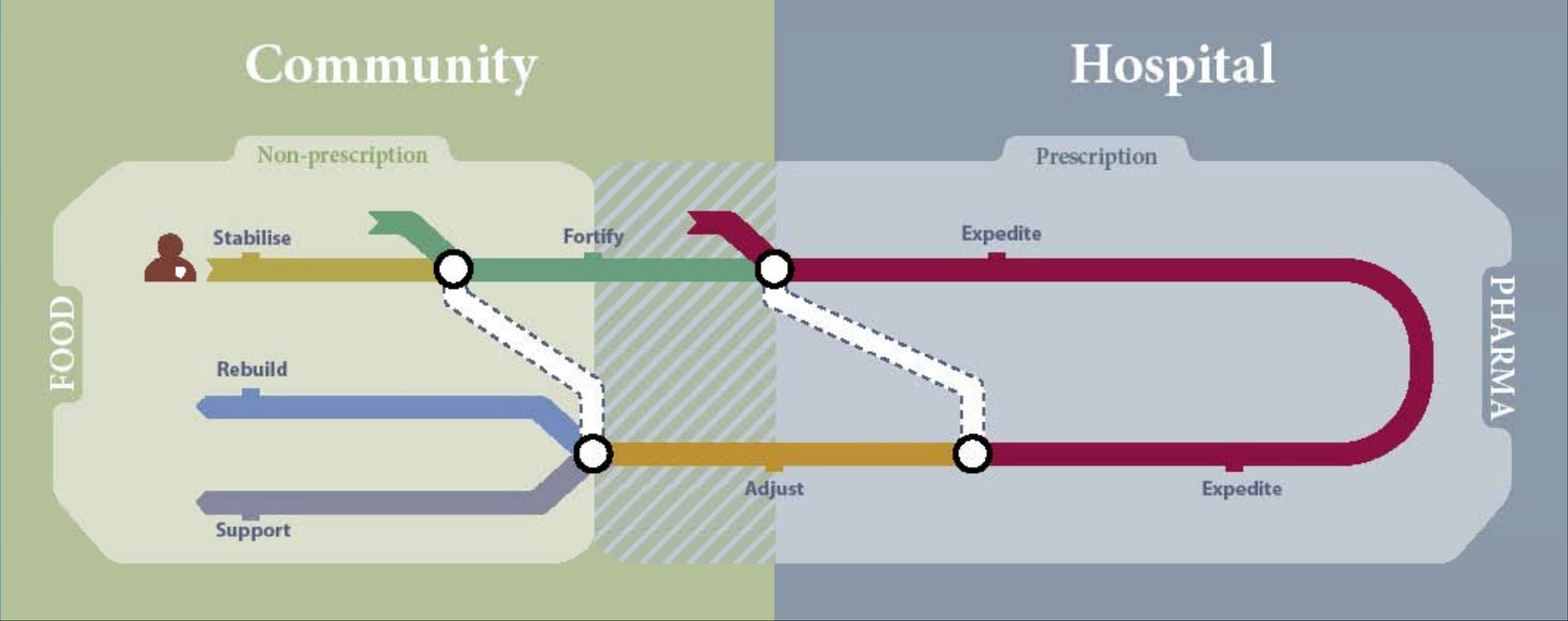
From our observations, we identified six stages that most patient journeys can be built from. Some begin and end in the community, some begin there and end in hospital, and some the other way around.
| Stage | The patient’s need | What we saw |
|---|---|---|
| Stabilise | Halt the slide | Many patients lost weight and changed their diets months before a diagnosis, with no one to guide them. |
| Fortify | Prepare me for treatment | Patients were told to gain weight before chemotherapy, or might be too frail for surgery. |
| Expedite | Speed me towards recovery | Patients, nurses, doctors and hospital managers all wanted treatment to be fast and effective. |
| Adjust | Help me establish a new normal | The move from hospital to home was consistently traumatic; often only paperwork followed the patient. |
| Support | Sustain my quality of life | Patients who couldn’t fully recover still wanted to feel as normal and included as possible. |
| Rebuild | Help me get back to full health | Recovering and chronic patients wanted to manage their condition without giving up normal, busy lives. |
Opportunities at every stage
Organizing around the journey showed where each message, service and product would matter most, and to whom. Promoting early stabilization products to hospital managers made no sense; telling them that better nutrition shortens hospital stays did.
- Communications targeted by stage, to patients and carers, pharmacists, community and hospital nurses, doctors, dietitians and hospital managers.
- Services such as a pharmacy self-assessment for people losing weight, an impartial nutrition advice kit doctors hand over at diagnosis, and a hospital-to-home transition service.
- Products and channels such as an over-the-counter version of a pre-treatment formula, compact doses designed for the hospital medication round, and supplements sold in pharmacies and food stores.
Testing cancer nutrition concepts
In the next phase, we focused on oncology. We placed service and product concepts along three stages of cancer care (preparing for treatment, during treatment and repairing after treatment) and tested them in a second round of research. Three of the concepts:
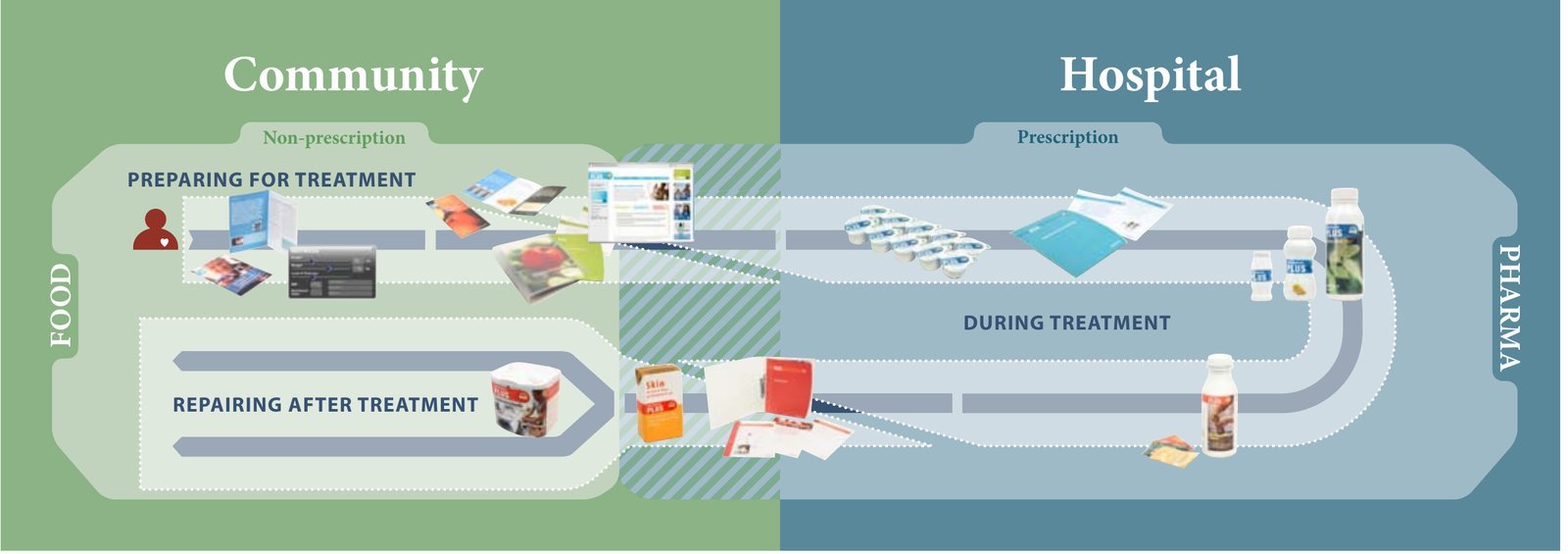
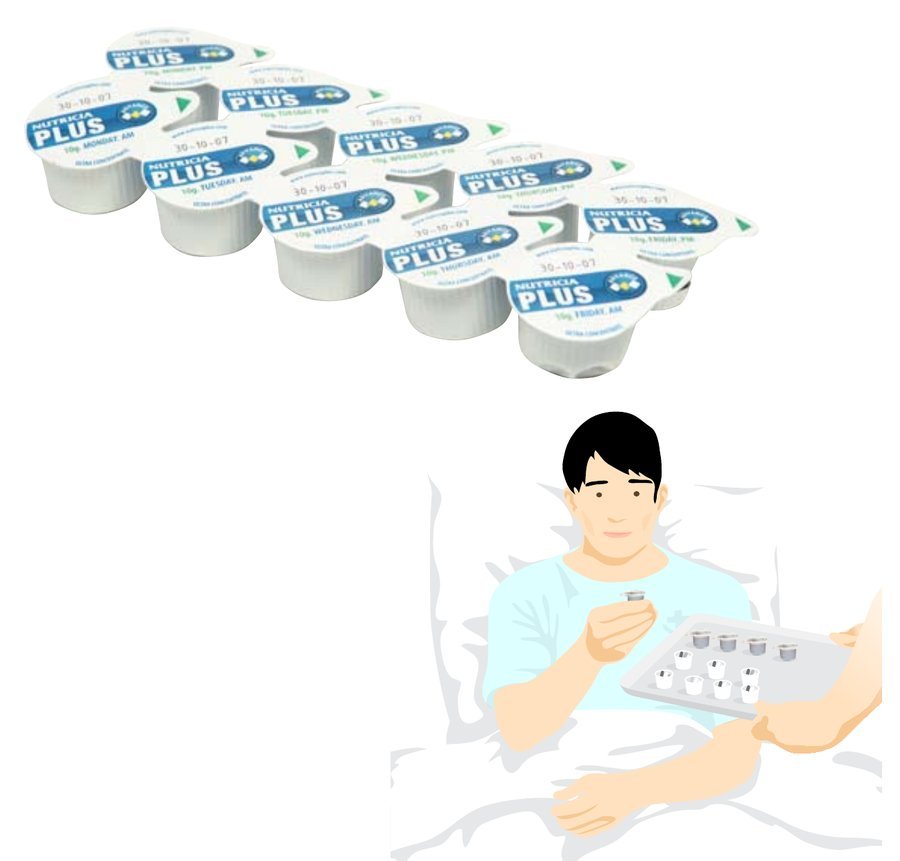
- Ultra-concentrated single doses: many prescribed supplements never reached patients, or weren’t finished, because bottles and cartons didn’t fit the nurse’s medication round. Sealed single-dose cups let the nurse confirm each dose at the bedside. People felt the format was taken more seriously, which helped patients take it as prescribed.
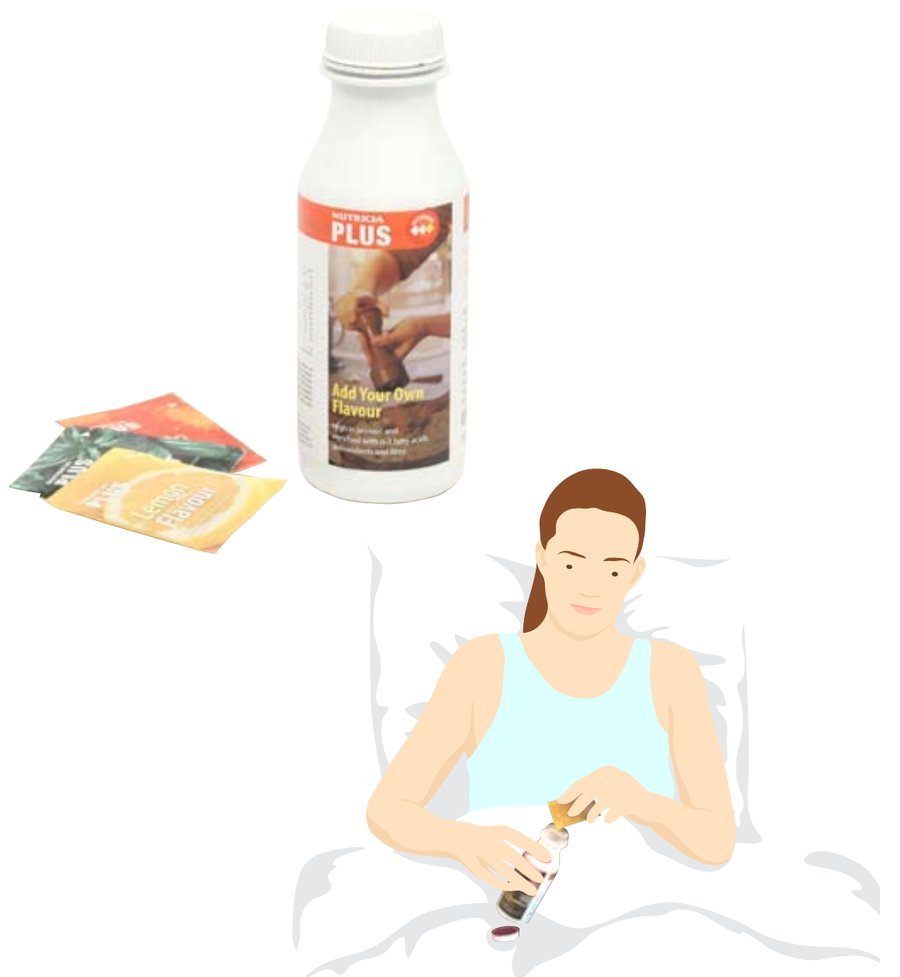
- Add your own flavour: chemotherapy changes taste and smell. A neutral base with sweet or savoury flavourings gave patients more control. Feedback: nurses wouldn’t have time to add flavours in hospital, so it fit better at home.
- Real food powder: some carers already mixed supplements into soups and sauces, even though the packaging discouraged it. A powder with recipes supported this. Feedback: say “portion” instead of “dose”, explain the benefits more clearly and make the pack smaller.
Across all concepts, people asked us to:
- Put food at the centre
- Keep it simple
- Focus on nutrition
- Don’t over-promise
- Prove it
- Keep it affordable
- Be optimistic but honest
- Remember everyone’s different
This study was done in 2006. The core idea, that nutrition should follow patients through every stage of care and across the line between hospital and home, is now central to how health systems approach malnutrition and cancer care.
Postscript: in 2007, Danone acquired Numico. Nutricia is now part of Danone’s specialized nutrition business.